
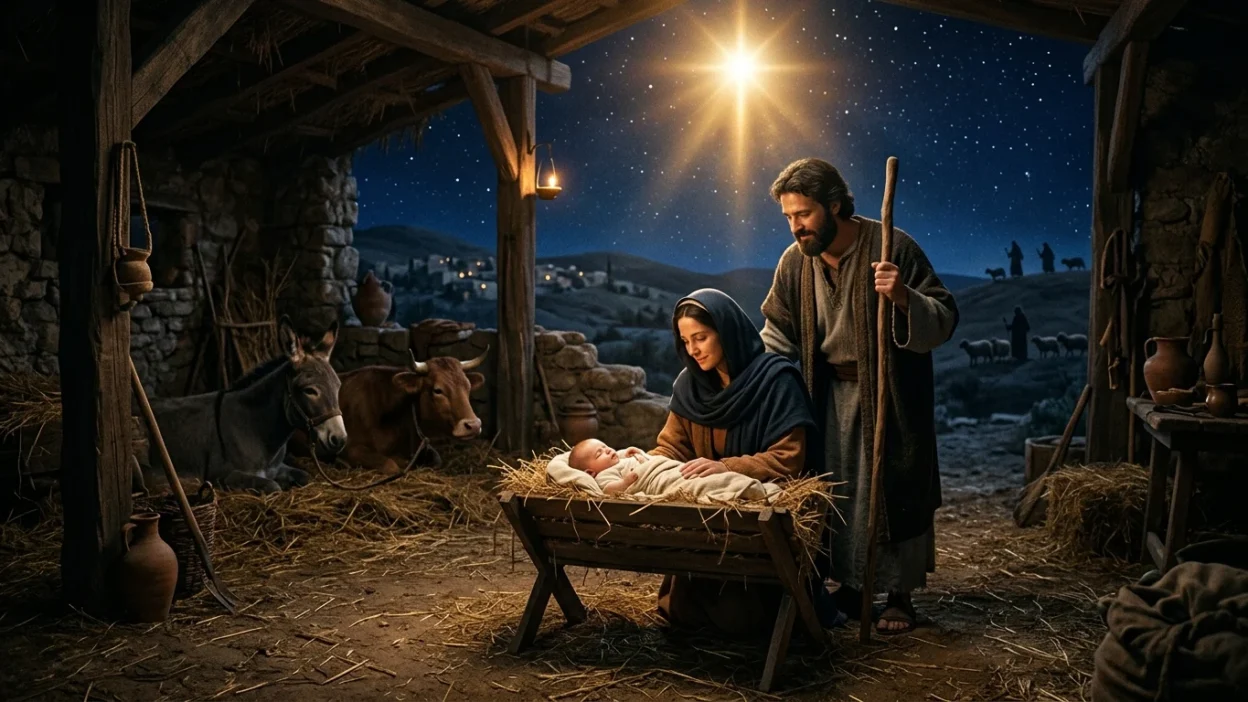
Every year, Christmas brings a special feeling. Homes glow with lights. Churches sing familiar songs. Families gather around a table. Children wait with excitement for gifts. But behind all these traditions is a much deeper question: What is the Christmas meaning in the Bible?
Christmas is more than a holiday. For Christians, it points to the birth of Jesus Christ, the Son of God and Savior of the world.
The Bible does not give us the exact date of Jesus’ birth. It also does not command Christians to celebrate Christmas as a yearly holiday. Yet the birth of Jesus is one of the most important events in the Bible. Matthew and Luke give us the story of His birth and show why it matters.
Luke 2:10–11 says that the angel brought good news of great joy and announced the birth of a Savior, Christ the Lord.
This gives Christmas its true meaning. It is about God coming near to humanity through Jesus. It is about hope for people who feel lost, peace for troubled hearts, and salvation for those who put their faith in Christ.
So, what does Christmas mean in the Bible? It reminds us that God kept His promise and sent His Son to bring light, grace, and salvation to the world.
Let us look deeper at this beautiful biblical meaning.
Biblical Meaning of Christmas
The Christmas meaning in the Bible centers on the birth of Jesus Christ. His birth was not an ordinary event. It was part of God’s plan of salvation.
1. Christmas Means God Came Near
One of the clearest meanings of Jesus’ birth is found in Matthew 1:23:
“They shall call his name Emmanuel,” which means, “God with us.”
The name Emmanuel carries a powerful message. God did not remain distant from human suffering. He came near.
Jesus entered the world as a baby. He lived among people. He experienced hunger, sadness, rejection, pain, and temptation, yet He remained without sin.
Christmas reminds Christians that God is with us.
When you feel alone, Christmas can remind you that God has not forgotten you. When life feels uncertain, His presence gives you hope.
2. Christmas Means Hope
The world Jesus entered was filled with trouble. People needed hope, and God answered that need through Christ.
Isaiah 9:6 had promised the coming of a special child:
“For unto us a child is born, unto us a son is given.”
The birth of Jesus fulfilled God’s promise in a remarkable way.
This is why Christmas carries a message of hope. Jesus came as the Light of the world.
John 8:12 records Jesus saying:
“I am the light of the world.”
Light is especially meaningful when everything around us feels dark. Christmas points believers toward the light of Christ.
3. Christmas Means Salvation
The angel’s message to Joseph explains another important part of the Christmas story.
Matthew 1:21 says that Mary would give birth to a son and that His name would be Jesus because He would save His people from their sins.
The name Jesus is connected with salvation.
Therefore, Christmas is not only about a baby in Bethlehem. It points forward to the entire mission of Christ.
Jesus came to save.
His birth, life, death, and resurrection are connected. The manger points toward the cross, and the cross points toward the victory of the resurrection.
This gives Christmas a much deeper Christian meaning.
4. Christmas Means Great Joy
When the angel appeared to the shepherds, he said:
“Fear not, for behold, I bring you good news of great joy.” — Luke 2:10
Notice the words great joy.
The birth of Jesus was good news for everyone. It was not good news only for the wealthy, powerful, or religious leaders.
The announcement came to ordinary shepherds.
This shows something beautiful about God’s heart. His message of salvation is offered to all people.
Christmas reminds us that true joy is not found only in gifts, food, decorations, or celebrations. True joy is found in Christ.
5. Christmas Means Peace
The angels praised God after announcing Jesus’ birth.
Luke 2:14 speaks of glory to God and peace on earth.
Jesus came to bring peace between God and humanity. Through Him, sinners can be forgiven and restored to God.
This does not mean that every Christian will have a life without problems. Jesus Himself warned His followers that they would face trouble.
But believers can have peace with God even during difficult seasons.
Christmas can therefore become a reminder to stop, pray, and trust God instead of allowing fear to control the heart.
6. Christmas Means God Keeps His Promises
The birth of Jesus was connected to promises God had made long before.
Isaiah spoke of a coming child. Micah 5:2 pointed to Bethlehem as the place from which a ruler would come.
Matthew and Luke show how Jesus’ birth fits into God’s larger plan.
This teaches an important lesson: God is faithful to His promises.
Sometimes we wait for answers and wonder why God seems silent. The Christmas story reminds us that God’s timing may be different from ours, but His promises remain trustworthy.
Spiritual Significance and Symbolism
The spiritual symbolism of Christmas reaches far beyond decorations and traditions.
The Manger Symbolizes Humility
Jesus was laid in a manger. Luke 2:7 tells us that there was no proper place for Him in the lodging area.
The King of kings entered the world in humble circumstances.
This teaches us that God’s greatness does not always appear in the way people expect.
Christmas invites us to practice humility. We do not need fame or wealth to have value in God’s eyes.
The Star Points to Christ
Matthew 2 describes the wise men following a star as they searched for Jesus.
The star has become a powerful Christmas symbol because it points toward the One who brings light.
For Christians, this can remind us to keep our eyes on Jesus rather than the distractions around us.
The Gifts Remind Us of Giving
The wise men brought gifts to Jesus, including gold, frankincense, and myrrh.
Their gifts remind Christians that Christmas can be a time of generous love.
The greatest gift, however, is God’s gift of His Son.
John 3:16 teaches that God loved the world and gave His only Son so that those who believe in Him may have eternal life.
Christmas is therefore a beautiful reminder that love gives.
The Nativity Reminds Us of God’s Presence
The nativity scene brings together Mary, Joseph, Jesus, shepherds, angels, and later the wise men.
Each part points toward God’s work in history.
The central message remains simple:
Jesus came into the world. God was fulfilling His plan. Hope had entered human history.
Biblical Interpretations in Dreams or Real Life
Some people may dream about Christmas, a manger, a baby, a star, angels, gifts, or Christmas lights.
From a Christian perspective, these images should not automatically be treated as a direct message from God. The Bible encourages believers to seek wisdom, prayer, and biblical truth rather than relying only on dreams.
A peaceful Christmas scene may remind someone of hope, peace, new beginnings, or God’s presence.
A joyful celebration may reflect gratitude, family love, or a desire to grow closer to God.
A lonely or sad Christmas dream may reveal feelings of loss or a deep need for comfort.
The best response is not fear. Bring the experience to God in prayer and compare every spiritual impression with Scripture.
Remember: Jesus is the center, not the dream or symbol itself.
Practical Lessons & Faith Insights
Christmas invites us to slow down and remember what matters most.
Choose faith over fear. Give thanks for Jesus. Practice generosity. Forgive others. Make time for prayer.
If you are waiting for God to answer a prayer, remember the Christmas story. God’s promises may take time, but His faithfulness does not change.
Conclusion
The Christmas meaning in the Bible is centered on Jesus Christ. His birth reveals God’s love, brings hope to the world, points to salvation, and reminds us that God is with us.
Christmas is more than lights, gifts, and traditions. It is a reminder of the greatest gift God gave humanity: His Son, Jesus Christ.
May this Christmas draw your heart closer to Christ and fill your life with His hope, peace, joy, and love.

Bret Lee is a dedicated Bible writer and Scripture researcher at Bibliaxs.com, passionate about exploring biblical meanings, Christian teachings, and spiritual wisdom. He creates insightful content that helps readers deepen their understanding of God’s Word and strengthen their faith.