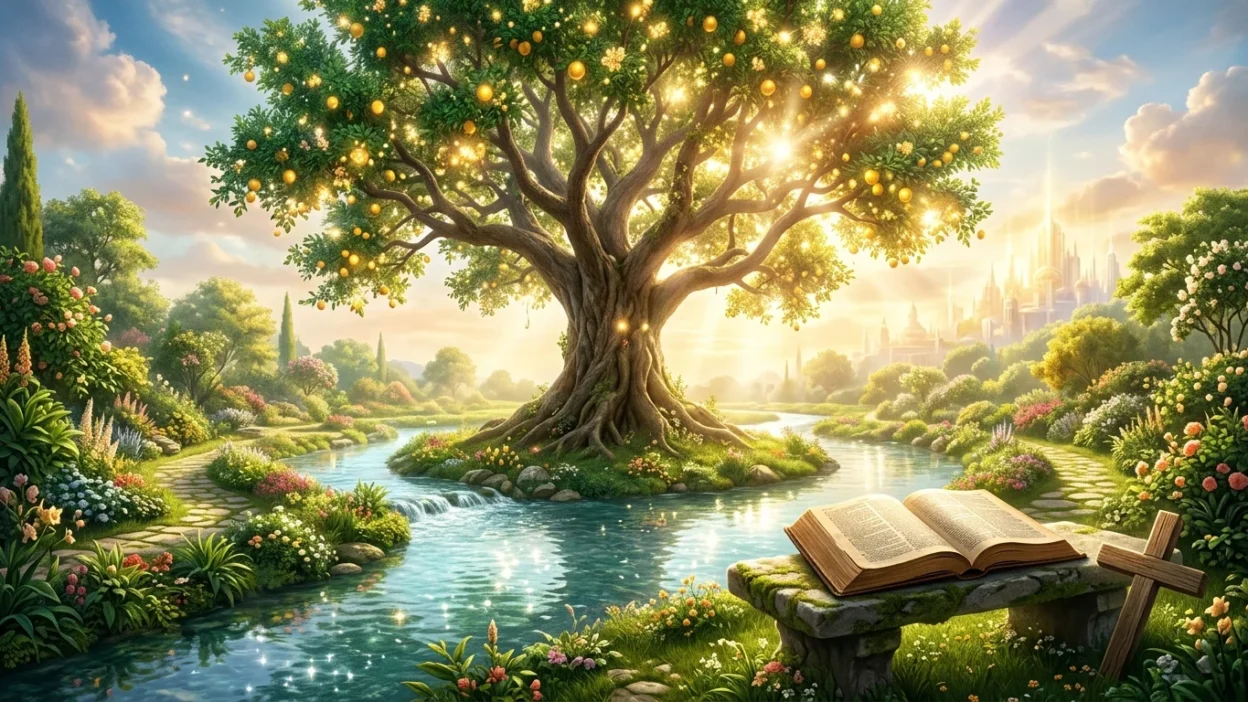
Imagine walking through a beautiful garden filled with green trees, fresh fruit, and peaceful streams. In the middle of the garden stands one special tree. It looks different from the others. It seems to carry a deeper mystery.
This is the picture we find in the Bible with the Tree of Life.
The tree first appears in the Garden of Eden. It appears again near the end of the Bible in Revelation. Because of this, many Christians wonder, “What does the Tree of Life mean in the Bible?”
The answer is full of hope.
The Tree of Life points to life, God’s presence, blessing, restoration, and eternal life. It reminds us that God is the source of true life. It also shows the beautiful future God promises to His people.
The story of the Tree of Life is not only about a tree. It is part of a much larger story. It begins in creation, continues through humanity’s fall, and ends with restoration.
When we understand this biblical symbolism, we see a powerful message: what was lost in Eden will one day be restored through God.
Let us explore the biblical meaning of the Tree of Life and what it can teach us about faith, hope, and God’s plan.
Biblical Meaning of the Tree of Life
The Tree of Life meaning in the Bible is closely connected with God’s gift of life and His presence.
The first major reference appears in Genesis.
The Tree of Life in the Garden of Eden
Genesis 2:9 says that God caused trees to grow in Eden, including the tree of life and the tree of the knowledge of good and evil.
The Tree of Life stood in the garden where Adam and Eve lived in close fellowship with God.
It represents the abundance and life that came from God. Humanity lived in a world without sin, suffering, or death.
But everything changed when Adam and Eve disobeyed God.
After their sin, God sent them out of Eden. Genesis 3:22–24 explains that they were prevented from reaching the Tree of Life.
This moment carries a serious warning.
Sin separates humanity from the fullness of life with God.
The Tree of Life was no longer freely available to humanity in Eden. Yet the story does not end there.
The Tree of Life and Eternal Life
The Bible later connects life with God to eternal hope.
In Proverbs, the phrase “tree of life” is used in a symbolic way.
Proverbs 3:18 says:
“She is a tree of life to those who take hold of her.”
Here, wisdom is described as a tree of life.
This shows that the biblical symbolism of the tree is not limited to one physical tree. It can represent life, wisdom, blessing, and the good things that come from God.
Proverbs 11:30 also says:
“The fruit of the righteous is a tree of life.”
This gives another beautiful picture. A righteous life can bring blessing and good influence to others.
In Proverbs 13:12, hope fulfilled is also described as a tree of life.
These verses show that the Tree of Life can point toward something that brings renewal, hope, healing, and flourishing.
The Tree of Life in Revelation
The most powerful biblical picture appears in Revelation.
After the fall of humanity in Genesis, the Tree of Life disappears from the story for a long time. Then it returns in the final chapters of the Bible.
Revelation 22:2 describes the Tree of Life in the restored creation:
“On each side of the river stood the tree of life.”
This is a beautiful ending.
The Bible begins with humanity living in a garden with the Tree of Life. It ends with God’s people enjoying life in His restored creation.
The message is clear:
God’s story moves from creation to fall and finally to restoration.
Revelation 22:14 speaks of those who have the right to the Tree of Life.
For Christians, this points to the hope of eternal life with God.
The Tree of Life and Jesus
The Tree of Life also invites Christians to think about Jesus and salvation.
Jesus said in John 11:25:
“I am the resurrection and the life.”
The Bible teaches that eternal life comes through Christ.
While Scripture does not directly say that Jesus is the Tree of Life, Christians can see a meaningful connection between the two themes. The Tree represents life, while Jesus is described as the life.
Through Christ, believers have hope beyond sin and death.
This gives the Tree of Life a deeply comforting Christian meaning. It reminds us that God’s desire is not destruction but restoration and life.
Spiritual Significance and Symbolism of the Tree of Life
The Tree of Life carries several important spiritual lessons.
1. God Is the Source of Life
A tree cannot live without water, sunlight, and nourishment. In the same way, our spiritual lives depend on God.
Jesus said in John 15:5:
“I am the vine; you are the branches.”
This reminds us that spiritual life comes from remaining connected to Christ.
When prayer becomes part of our daily life, when we read Scripture, and when we trust God, our faith can grow like a healthy tree.
2. The Tree Represents Spiritual Growth
Trees grow slowly.
They begin as small seeds. Their roots become stronger over time. Eventually, they produce fruit.
Christian growth can happen in the same way.
You may not see change every day. But through prayer, obedience, patience, and faith, God can slowly transform your heart.
Spiritual growth takes time, but God is still working.
3. The Tree Represents Hope
The Tree of Life is especially meaningful when life feels difficult.
You may be walking through grief, uncertainty, or disappointment. Revelation reminds Christians that suffering is not the final chapter.
God promises restoration.
The final appearance of the Tree of Life gives believers a picture of healing, peace, and eternal hope.
4. The Tree Represents God’s Presence
The Tree of Life was placed in Eden, a place where humanity experienced God’s presence.
In Revelation, the Tree appears in God’s restored creation.
This creates a powerful theme: God wants to dwell with His people.
The greatest blessing is not simply the tree itself. It is the relationship with God that surrounds it.
Biblical Interpretations in Dreams or Real Life
What if you see a Tree of Life in a dream?
The Bible contains many dreams and visions, but it does not teach that every dream is a direct message from God. Therefore, dream interpretation should be approached with prayer and wisdom.
A healthy, green tree may remind you of growth, life, blessing, or spiritual renewal.
A tree filled with fruit may symbolize fruitfulness or the results of faithful living.
A dry or damaged tree may encourage personal reflection. It could remind you to examine your spiritual life and seek God’s renewal.
If you see a tree beside clear water, you might reflect on Psalm 1:3, which describes a righteous person as:
“a tree planted by streams of water.”
A peaceful Tree of Life dream can therefore become an opportunity to pray about your relationship with God.
Do not allow fear to control your interpretation. Let Scripture, prayer, and God’s character guide you.
Practical Lessons & Faith Insights
The Tree of Life encourages us to stay rooted in God.
Make time for prayer. Read Scripture. Trust God’s timing. Let your faith grow slowly and steadily.
Conclusion
The Tree of Life meaning in the Bible points to life, wisdom, blessing, God’s presence, restoration, and eternal hope. From Genesis to Revelation, it forms a beautiful picture of God’s plan for humanity.
What began in Eden ends with restoration. Through Christ, believers have hope that death and suffering will not have the final word.
Stay rooted in God, trust His promises, and keep growing in faith. His story ends in life, hope, and restoration.

Bret Lee is a dedicated Bible writer and Scripture researcher at Bibliaxs.com, passionate about exploring biblical meanings, Christian teachings, and spiritual wisdom. He creates insightful content that helps readers deepen their understanding of God’s Word and strengthen their faith.