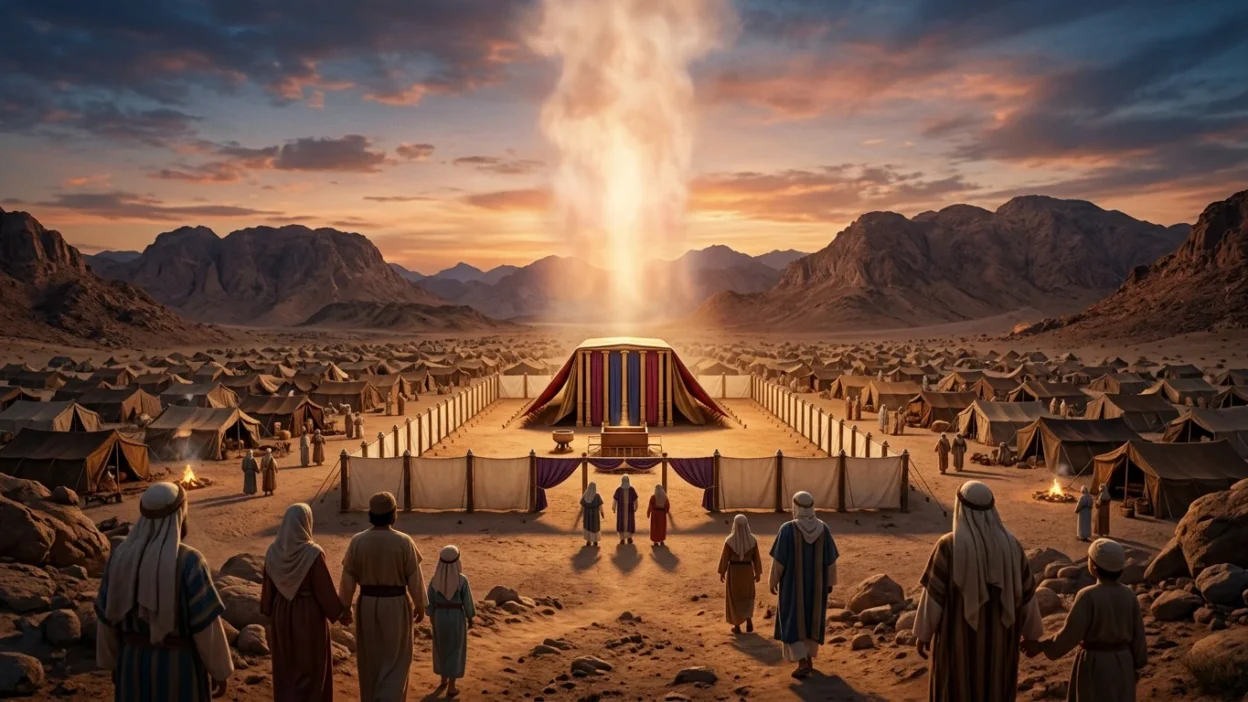
Imagine walking through the wilderness with no permanent home, no temple, and no city to call your own. In the middle of that journey, God tells His people to build a special place where He would dwell among them.
This was the tabernacle.
For ancient Israel, the tabernacle was more than a tent. It was a holy place that showed God’s presence, holiness, mercy, and desire to live among His people.
The word may sound distant to modern readers. But the tabernacle meaning in the Bible carries a message that is still beautiful today.
The tabernacle reminded Israel that God had not abandoned them in the wilderness. He was with them on the journey.
Exodus 25:8 gives the heart of its purpose:
“Then have them make a sanctuary for me, and I will dwell among them.”
This simple statement reveals something powerful. God wanted to be near His people.
The tabernacle also points forward to Jesus Christ and the Christian belief that God came near to humanity in a deeper way.
So, what does the tabernacle mean in the Bible, and what spiritual lessons can we learn from it today?
Let’s explore its meaning through Scripture.
Biblical Meaning of the Tabernacle
The tabernacle was a portable sanctuary built by the Israelites during their journey through the wilderness.
God gave Moses detailed instructions for building it in Exodus 25–40.
It was designed to be moved as Israel traveled. Whenever the people moved, the tabernacle moved with them.
This gives us the first major biblical meaning:
The tabernacle represented God’s presence among His people.
God Dwelling Among His People
Exodus 25:8 says:
“Let them make me a sanctuary, that I may dwell among them.”
God was not distant from Israel.
He chose to dwell in the middle of their community.
The tabernacle became a visible reminder that the Lord was with them.
This would have been deeply comforting during their wilderness journey.
They did not know everything that would happen next. But they knew that God was leading them.
The same truth can bring comfort to Christians today.
You may not know what tomorrow holds. But you can trust that God is present in every season.
The Tabernacle and God’s Holiness
The tabernacle was also a picture of God’s holiness.
It contained different areas, including the outer court, the Holy Place, and the Most Holy Place.
The Most Holy Place was the most sacred area. The Ark of the Covenant was kept there.
Only the high priest could enter the Most Holy Place, and he did so under specific conditions.
This showed that God is holy and should not be approached carelessly.
The tabernacle therefore teaches both God’s closeness and God’s holiness.
God was near, but He was also holy.
The Ark of the Covenant
The Ark was one of the most important objects in the tabernacle.
It represented God’s covenant and was connected with His presence among Israel.
Above the Ark was the mercy seat, where God said He would meet with Moses.
Exodus 25:22 says:
“There I will meet with you.”
What a beautiful picture.
The tabernacle reminds us that God is not simply an idea. He is a God who desires a relationship with His people.
The Tabernacle and Worship
The tabernacle was also a place of worship and sacrifice.
The Israelites brought offerings according to God’s instructions.
These sacrifices reminded the people of the seriousness of sin and the need for atonement.
The sacrificial system also points forward to the work of Jesus.
The New Testament teaches that Christ offered Himself once for sins.
Hebrews 9 explains how the earthly tabernacle pointed toward greater spiritual realities fulfilled through Christ.
The Tabernacle Points to Jesus
One of the most beautiful connections appears in John 1:14.
John writes that the Word became flesh and “dwelt among us.”
The wording reflects the idea of God dwelling among His people.
Jesus came into the world and lived among humanity.
He showed God’s love, truth, grace, and glory in a way people could see.
For Christians, the tabernacle can therefore be understood as part of the larger biblical story that points toward God coming near through Jesus Christ.
The message moves from a tent in the wilderness to God’s presence among people through Christ.
The Tabernacle and Access to God
The tabernacle also helps explain why Jesus’ death is so important.
Under the old covenant, access to the Most Holy Place was restricted.
But when Jesus died, Matthew 27:51 says that the curtain of the temple was torn in two from top to bottom.
This powerful event points to a new way of approaching God.
Through Christ, believers can come to God with confidence.
Hebrews 10:19–22 encourages Christians to draw near to God with sincere hearts and faith.
The tabernacle story therefore moves toward a beautiful message:
Jesus makes a way for people to draw near to God.
Spiritual Significance and Symbolism of the Tabernacle
The tabernacle carries several spiritual lessons for Christian life.
1. God Wants to Be Near You
The first lesson is simple:
God desires relationship.
He told Israel to build a place where He could dwell among them.
Today, Christians are reminded that God’s presence is not limited to a building.
Jesus promised His followers that He would be with them (Matthew 28:20).
When you walk through a difficult season, you are not forgotten.
2. God’s Presence Brings Guidance
The Israelites were guided through the wilderness by God’s presence.
Exodus 40:36–38 describes how the cloud over the tabernacle showed when Israel should travel and when they should remain.
This teaches an important lesson about divine guidance.
Sometimes we want God to show us the entire road.
But He may show us only the next step.
Like Israel, we can learn to trust His direction one day at a time.
3. Holiness Matters
The tabernacle reminds believers that God is holy.
Following Christ is not only about receiving blessings. It is also about allowing God to transform our lives.
This means turning away from sin and growing in love, humility, forgiveness, and obedience.
4. God Meets Us in the Journey
The tabernacle was not built in a comfortable palace.
It traveled through the wilderness.
This is important.
God was present during a difficult journey.
If you are in a wilderness season today, do not assume that God has left you.
The wilderness can still be a place where God meets you.
Biblical Interpretations of the Tabernacle in Dreams or Real Life
If you dream about a tabernacle, tent, sanctuary, or sacred place, the Bible does not provide one fixed dream interpretation.
However, the imagery may encourage reflection on themes found in Scripture.
A peaceful tabernacle may remind you of God’s presence, protection, worship, or spiritual rest.
A damaged or empty tabernacle may lead you to reflect on your relationship with God, your prayer life, or areas where you feel spiritually distant.
A bright or welcoming sanctuary may symbolize hope, renewal, or a desire to draw closer to God.
Still, dreams should be handled carefully.
Not every dream is a divine message. Test spiritual impressions through Scripture, prayer, wisdom, and Christian counsel.
The safest response is not fear but reflection.
Ask, “Lord, what are You teaching me through Your Word?”
Practical Lessons & Faith Insights
The tabernacle meaning in the Bible reminds us that God desires to dwell with His people.
Make space for Him through prayer, Scripture, worship, and quiet reflection.
When life feels uncertain, remember the Israelites in the wilderness: God can be present even when the path is unclear.
Trust His guidance and follow Him one step at a time.
Conclusion
The tabernacle meaning in the Bible points to God’s presence, holiness, worship, guidance, and desire to live among His people.
It reminds us that God was with Israel in the wilderness and that His presence ultimately points toward Jesus Christ.
You may not know where your journey is leading today. But you can trust the God who walks with you.
Seek His presence, trust His Word, and remember that you are never outside His care.

Bret Lee is a dedicated Bible writer and Scripture researcher at Bibliaxs.com, passionate about exploring biblical meanings, Christian teachings, and spiritual wisdom. He creates insightful content that helps readers deepen their understanding of God’s Word and strengthen their faith.